
The idea for the Creativity, AI, and the Human Research Cluster at Edinburgh Futures Institute took shape during my first months at the University of Edinburgh as a Chancellor’s Fellow in Design Informatics. I noticed that researchers, students, and practitioners across the University were engaging in diverse and compelling ways with questions about creativity and the human role in an increasingly digital world, but they did not necessarily have access to a shared space to bring these conversations together.
The response was immediate and enthusiastic. Within just a few months, the cluster brought together over 90 members—around three quarters from within the University, spanning all three Colleges and nine Schools, and the remaining quarter from external partners in industry and higher education across the UK, Europe, the US, and China.
At the core of the cluster is a motivating concern: as generative AI technologies develop, they challenge long-standing ideas about human creativity, its processes, its value, and its future. These technologies open new opportunities for creative practice but also raise fundamental ethical, cultural, and technical questions. The cluster recognises creativity not just as artistic expression, but as a vital human capacity, central to innovation, adaptation, and imagining alternative futures. The aim of the cluster is to create a space for collective reflection, experimentation, and collaboration on the evolving relationship between creativity and AI.
Through workshops, talks, performances, and collaborative projects, we are building an interdisciplinary and participatory community of shared inquiry, engaging with stakeholders beyond academia.
The cluster builds on and contributes to Edinburgh Futures Institute’s mission by offering a space for creative and critical engagement with the social and cultural implications of new technologies. What follows is a glimpse into what the cluster has achieved in its first year.
Cluster Launch
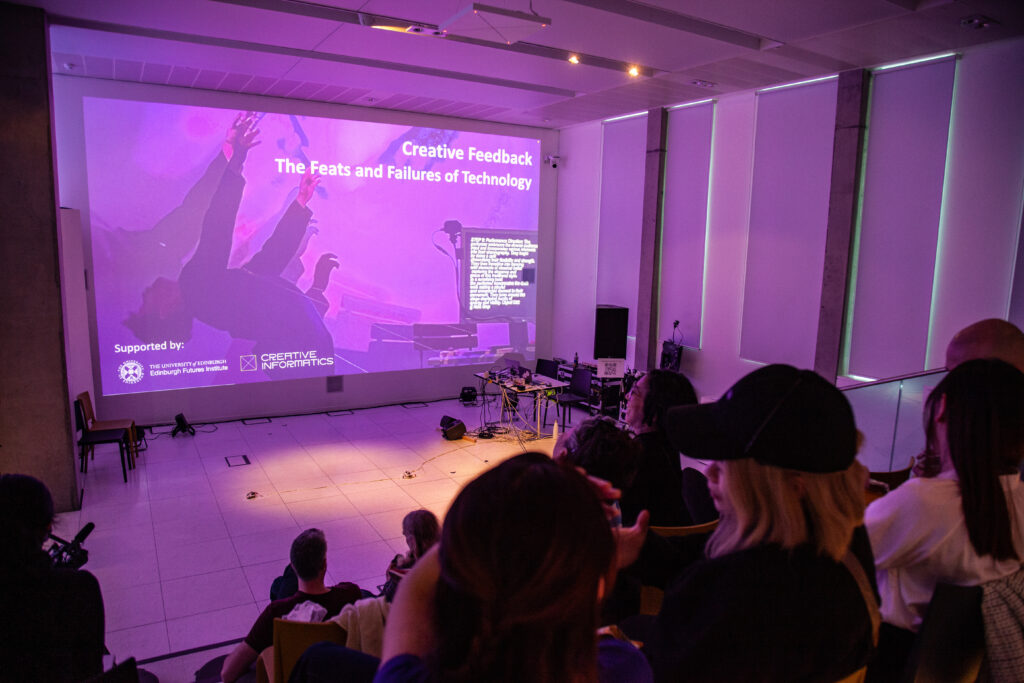
The cluster launched on 10 May 2024 with a public event at Inspace. Titled Creative Feedback: The Feats and Failures of Technology, the event brought together artists, researchers, and technologists to explore how creative agency is shaped, and at times constrained, by the digital tools we use.
The evening featured two audiovisual performances: Figure Infinity by Jung In Jung and Louis McHugh, and Traumgraz by Jung In Jung and Lynda Clark. The performances were followed by a panel discussion that invited reflection on themes such as platform labour, the communicative tensions between humans and AI, disinformation, and the dynamics of creative control.
This launch event set the tone for the cluster’s work: collaborative, experimental, and aimed at expanding the conversation around creativity, AI, and the human.
Read: Report on the Creative Feedback event
Setting the Scene: The Cluster’s Kick-off Meeting
One month after the launch event, on the 10 June 2024, members of the cluster gathered at the Edinburgh College of Art for an inaugural internal meeting to map shared interests and begin shaping the direction of the cluster’s activities.
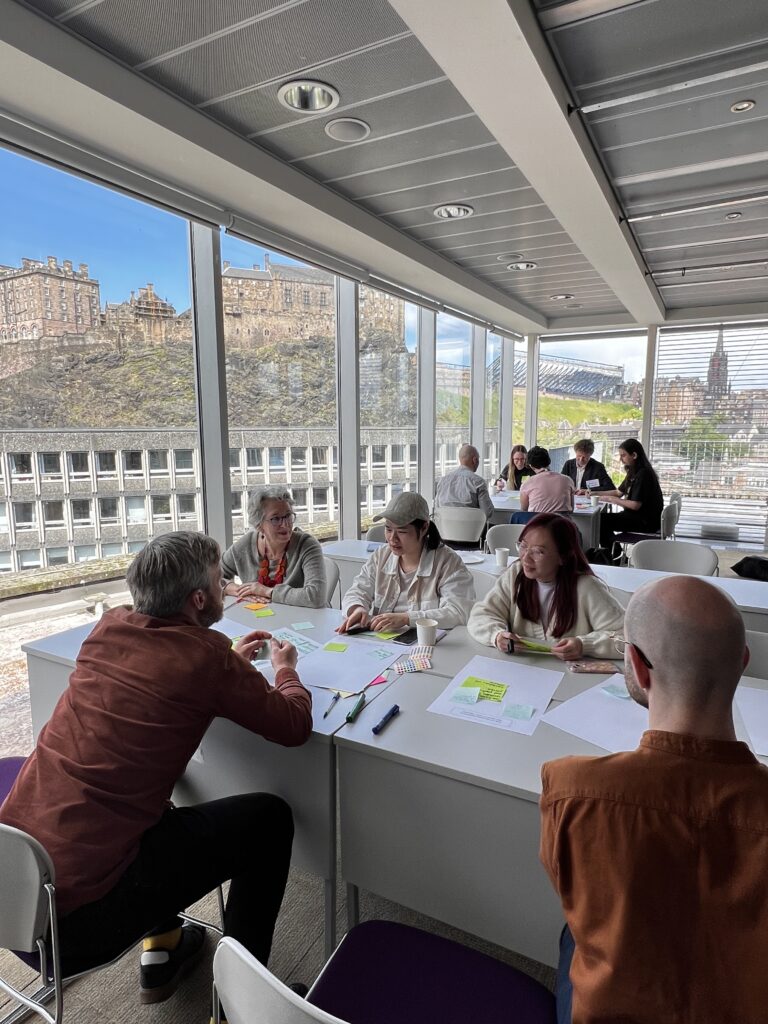
Members contributed their ideas, using boards and sticky notes to indicate interest areas, suggest potential collaborations, and brainstorm on paths for the cluster’s direction and strategy.
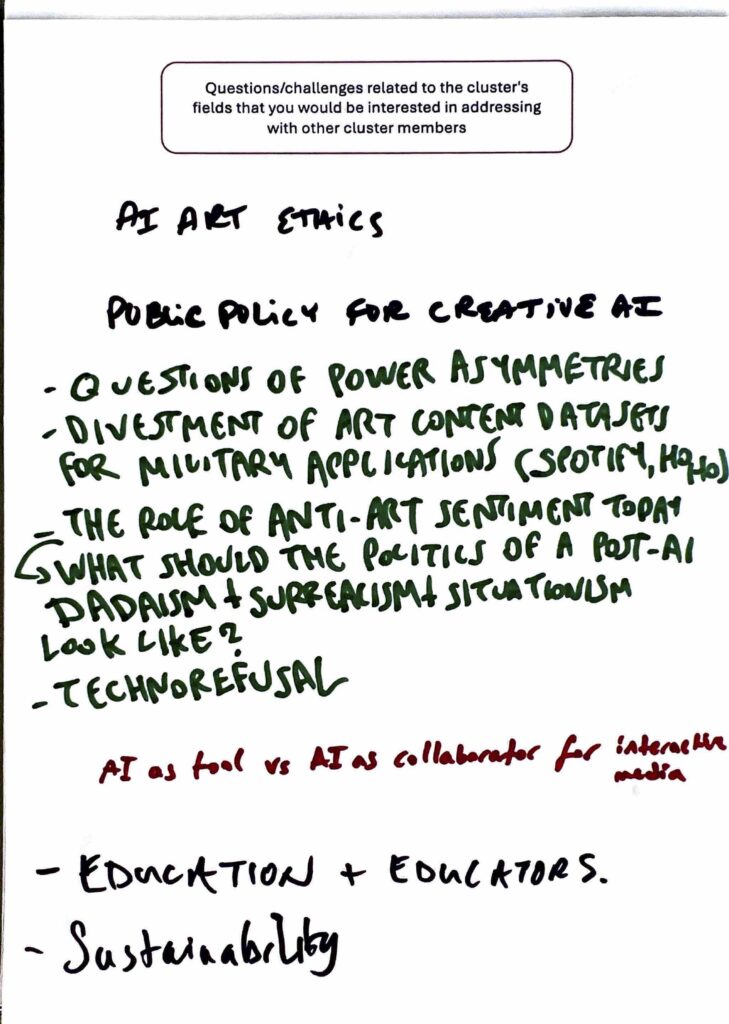
This was a first step in forming a collaborative community and the shared leadership model which would be developed in the first year of the cluster: aimed at breaking down traditional hierarchies, ensuring participation across career stages, and actively welcoming students, early career researchers, professional services staff, and external partners into the conversation.
Share and Connect Sessions
To sustain momentum and strengthen collaborations within the community, we launched a monthly series of Share and Connect sessions, hybrid meetings where cluster members present their work, share ongoing projects, and explore possible collaborations. Across eight sessions, 19 presenters participated, including 10 from within the University and 9 external contributors.
Topics ranged from AI ethics and cultural heritage to interactive art and co-designed technologies. The Share and Connect series have become a key space for testing ideas, finding collaborators, and expanding the cluster’s network.
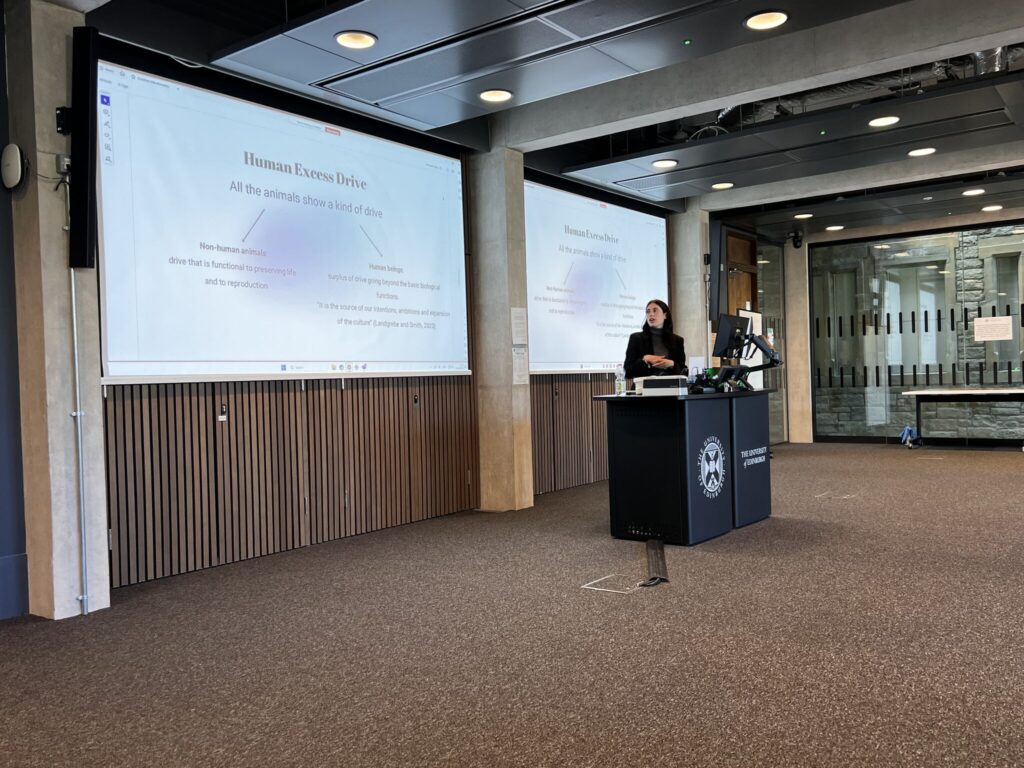
The sessions have not only helped surface diverse research themes but also initiated new conversations across disciplines and collaborations between cluster members to work on satellite initiatives and events, including:
The“Ethical Responsibilities in Displaying Provocative AI Artistic Experiences” panel in July 2024), which explored the ethical implications of exhibiting emotionally provocative, AI-driven artworks.
- The international symposium “AI and Digital Innovations for Voice and Vocal Music”, hosted by Alexandra Huang-Kokina and co-supported by the cluster.
- The participatory workshop “To Meme or Not to Meme”, co-hosted by cluster members Danilo Petrassi and Ian Rothwell in May 2025, which offered participants an opportunity to reflect on memes as a form of digital resistance.
- The hybrid performance-lecture and conversation “The Manual (How to Burn a Million Quid the AI Way)” organised by Vassilis Galanos in February 2025 which featured the participation of another cluster member, Emma Dorfman.
Christmas Networking Event
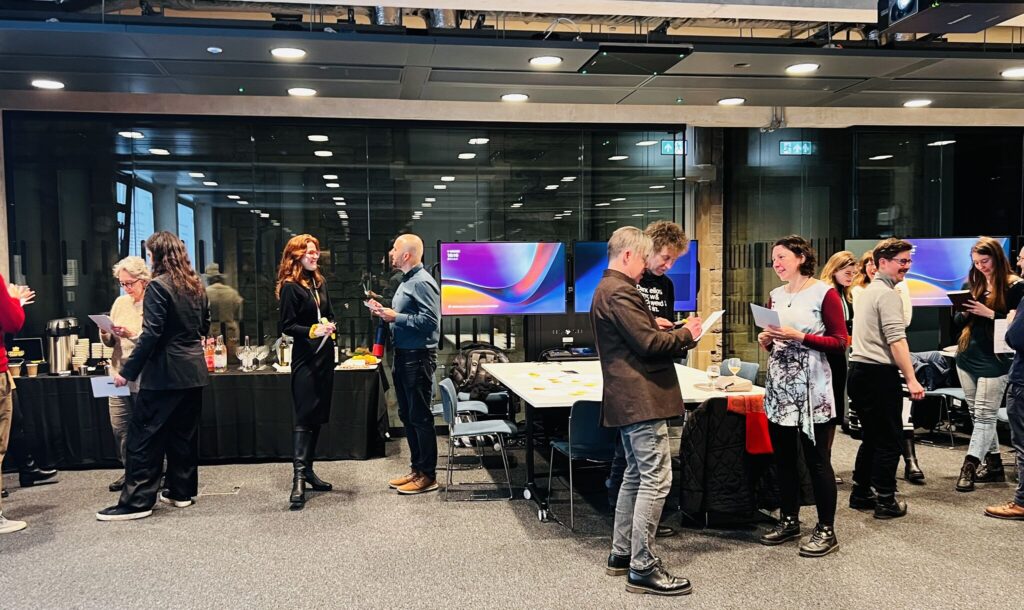
On 10 December 2024, exactly seven months after its launch, the cluster hosted a festive end-of-year networking event. Alongside food, drinks, and a light-hearted bingo game, the event was also an opportunity for starting a longer-term effort to map out the cluster’s core thematic areas. Using a Miro board and follow-up online forms, members contributed to shaping five broad research and practice domains that reflect the core areas of expertise and interest of the cluster:
- Theories and practices of creativity
- AI in creative domains
- Human-centred and social dimensions of AI
- AI ethics, responsibility, and governance
- AI in knowledge and learning contexts
Generative Creative Visions
As part of its commitment to interdisciplinary collaboration, two cluster members (Shama Rahman and me) co-led the Generative Creative Visions initiative funded the Generative AI Laboratory (GAIL). The project aimed to explore how generative AI can be used critically and creatively across disciplines, and how co-creative processes might be supported within academic, artistic, and technological communities.
Held at Edinburgh Futures Institute on 25 February 2025, the initiative brought together 25 participants for two half-day workshops.
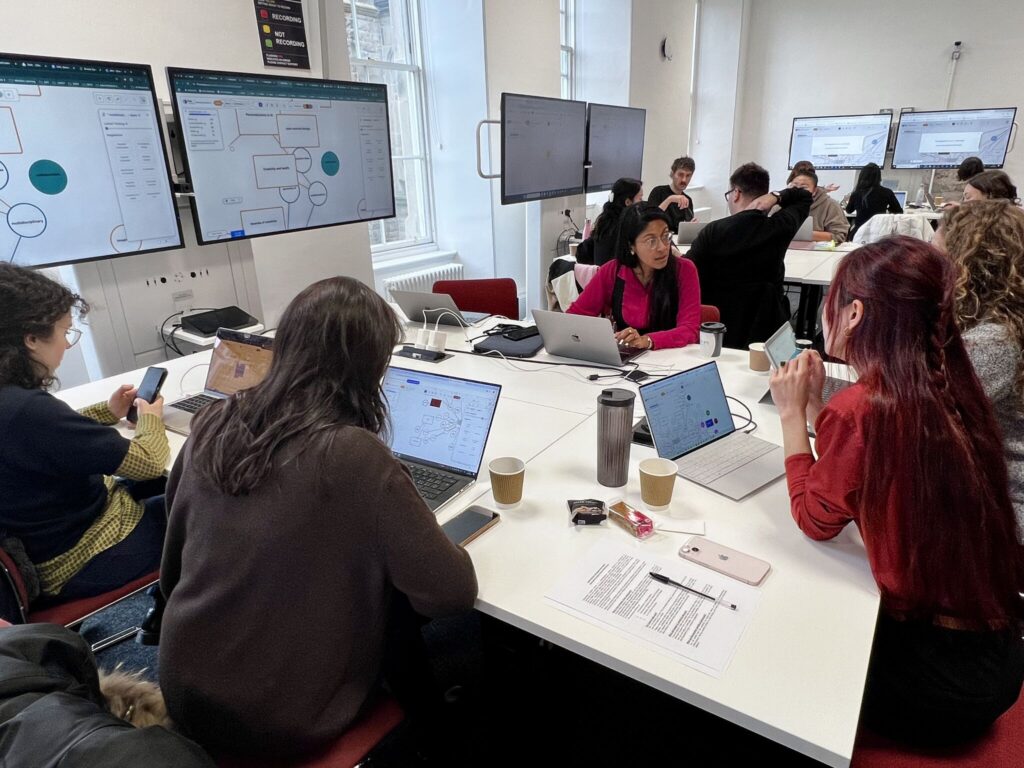
The sessions enabled interdisciplinary teams to prototype speculative ideas. Three projects were awarded a fund to develop their concepts further over four months: The Garden of (Un)Earthly Ais, Sphaerosymphony, and MIRAI (Measuring Integrity and Responsibility in AI Integration).
All projects were presented at a public showcase at Edinburgh Futures Institute on the 30 July 2025.
Link to the Generative Creative Visions showcase
Creative Industries Mixer Event
On 13 May 2025, the cluster hosted its first Creative Industries Mixer at the Edinburgh Futures Institute. Starting from an idea developed in collaboration with Caroline Parkinson, Sector Engagement Manager for the Creative Industries at EFI, and Claire Pembleton from Edinburgh Innovations, the event was designed to strengthen connections between cluster members and local creative industries, and to open up space for new forms of partnership.
The event brought together 53 participants, including members of the Creativity, AI, and the Human cluster and representatives from a range of industry sectors. Structured networking activities helped surface shared interests and identify future directions for collaboration. Industry challenges were introduced by partners including Vastu Scan, Qualcomm, and RedJay, alongside contributions from other attendees.
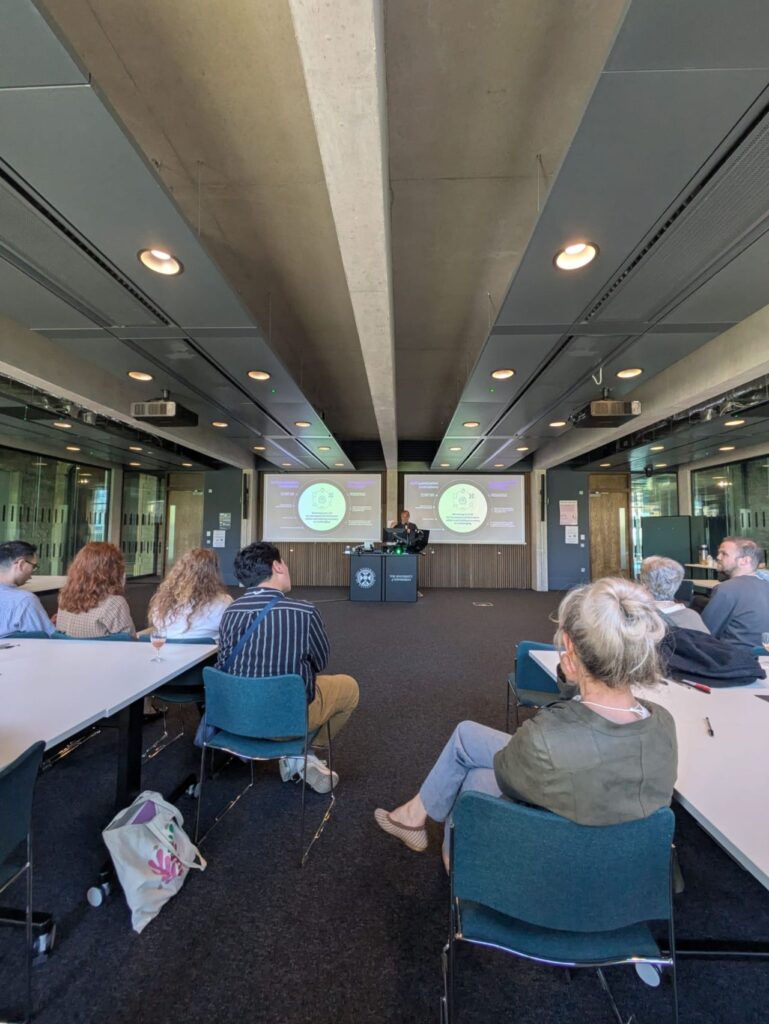
This event initiated a longer-term effort to refine how the cluster presents itself and shares knowledge more widely, beyond the university’s walls.
The Next Steps
We are using the summer break to take stock of what the cluster has achieved in its first year and to consider its future direction. This first phase has been intentionally exploratory, focused on building the community and mapping shared interests across disciplines.
We are now shifting towards a longer-term strategy aimed at supporting collaborative research, developing structured partnerships, and establishing sustained synergies within and beyond the University.
A Student Experience Grant, led by Pavlos Andreadis (School of Informatics) in collaboration with the cluster, is currently supporting the creation of a dynamic online platform to showcase member projects, thematic areas, and upcoming events in an accessible and creative way.
I look forward to continuing this work, building on the momentum of the cluster’s first year, to shape a dynamic space for research, experimentation, and collaboration.