Why did you choose your MSc and Edinburgh Futures Institute?
By the time I applied to Edinburgh, I had already spent a few years working with data, research, and technology. I had studied applied statistics with IT and had moved through roles where I was building systems, analysing information, and helping teams make decisions.
I enjoyed that work, but I had started becoming more curious about the questions behind the numbers. I would sometimes look at a dataset and wonder who was missing from it, or think about how a system could be technically correct and still feel unfair in practice. The more I worked with data, the more I realised I was just as interested in the people behind it.
That is what made the MSc in Data, Inequality, and Society feel so right for me. I was not looking for another programme that would simply teach me more tools. I wanted space to think about inequality, fairness, power, and representation while still staying close to the technology I genuinely enjoyed.
What drew me to EFI was that I did not feel I had to choose between those two sides of myself. I could be interested in models and systems and still care deeply about the people affected by them.
I also loved how interdisciplinary the programme felt. Some of my favourite classes were the ones where I walked in fairly sure of what I thought, listened to someone from a completely different background challenge that view, and walked out thinking, “Well… that is more complicated than I thought.” I liked that feeling. It made learning feel alive.
How did you get to where you are?
My career has gradually moved from working with data to thinking more deeply about the decisions that data shapes. I started in statistics and research, then moved into systems and technology roles where I saw something important: good technology is not just about whether a system works. It is about whether it works for people, whether it fits the reality around them, and whether it helps them make better decisions.
That is a big part of what I do now at One Acre Fund. I lead work across business intelligence, data and automation, supporting teams that work with millions of smallholder farmers. The work can be very technical, but the questions behind it are usually very human: Are we seeing the full picture? Are we making the right decision? Are we making someone’s work easier or just adding another system?
EFI sharpened that way of thinking. It made me more conscious of the fact that every dataset reflects choices, and every system carries assumptions about the people it is designed for. I think the biggest shift for me was moving from asking only, “Can we build this?” to also asking, “What happens because we built it this way?” That question has stayed with me, and it continues to shape the kind of work I want to do.
What did you gain from your time at Edinburgh Futures Institute/the University of Edinburgh?
What I gained most from EFI was perspective. The programme constantly placed me in conversations I would not naturally have encountered in a purely technical degree. I remember discussions on inequality where the room could hold several completely different interpretations of the same problem, and somehow all of them forced you to rethink your own assumptions. I enjoyed that tension.
I also became more comfortable with not having immediate answers. Before Edinburgh, I think I often approached learning as something to solve. EFI taught me that some of the most important questions are worth sitting with for a while.
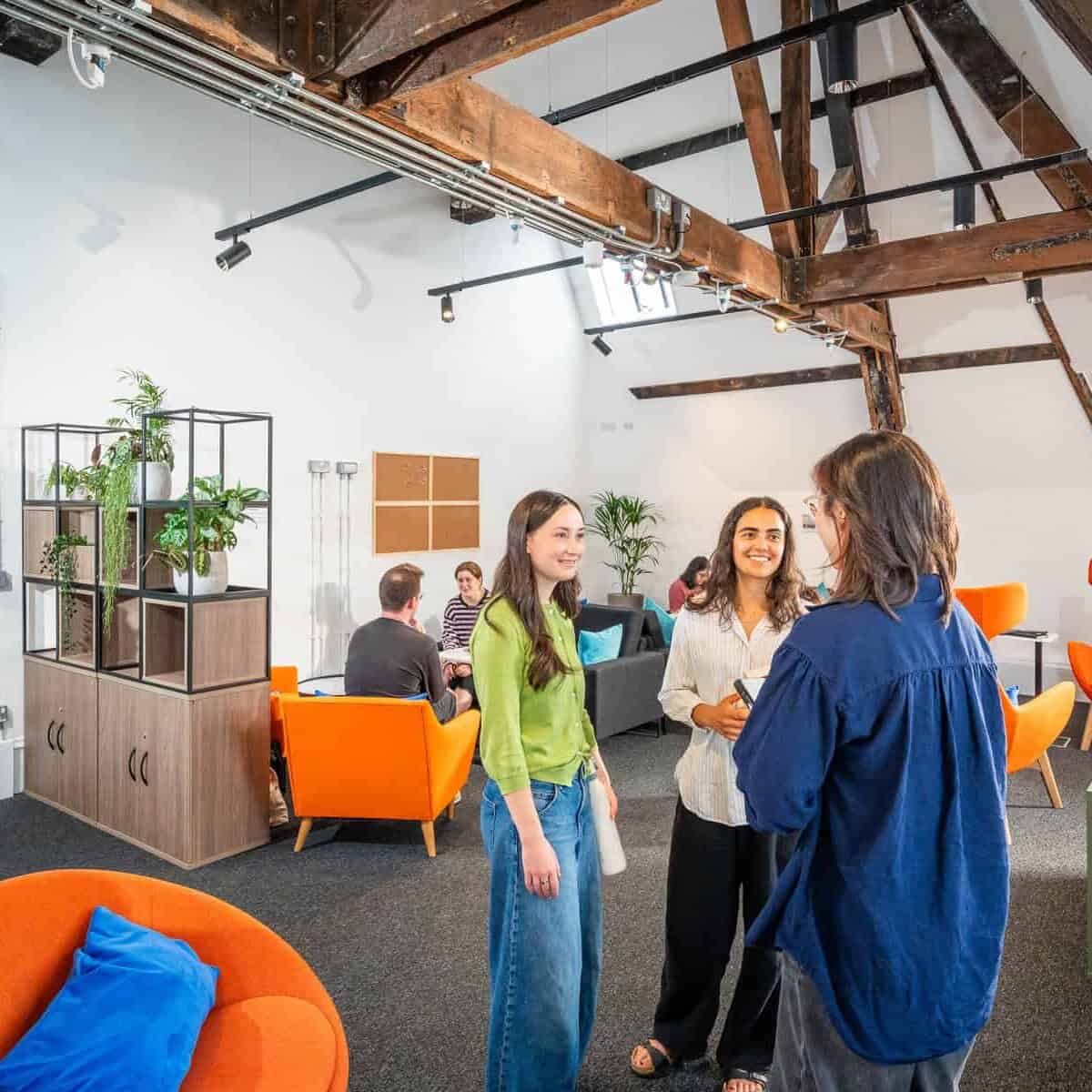
Outside the classroom, I gained community. The Mastercard Foundation Scholars community, friendships, long conversations after class, quiet afternoons working in the new EFI building, and even the small routines like free coffee became part of the experience.
Edinburgh gave me something I did not realise I needed at the time: space to slow down, think, and become more deliberate about what matters to me. I left with more confidence in my own perspective but also much more respect for perspectives different from mine.
Tell us about your Futures Project
My Futures Project looked at a question I care deeply about: how do we evaluate AI systems in African contexts without simply importing assumptions and standards developed elsewhere?
I developed a framework for assessing AI beyond technical performance looking at bias, explainability, ethics, governance, cultural relevance, and how systems are monitored over time. I then turned the framework into a web application and tested it using two very different cases: IBM Watson for Oncology in Africa and Vumacam’s surveillance system in Johannesburg.
What stayed with me most was seeing how quickly a technology that looks impressive on paper can become problematic when it meets a different social reality. A medical recommendation is not very useful if the treatment is unavailable or unaffordable locally. A facial-recognition system is not simply “less accurate” if its errors disproportionately affect the people being watched.
Building the tool also taught me to be a little suspicious of elegant frameworks. Real life is rarely as tidy as the model you design for it. The biggest lesson for me was that responsible AI has to involve the people and communities who will actually live with these systems.
Do you have any highlights or a favourite memory of your time at the University?
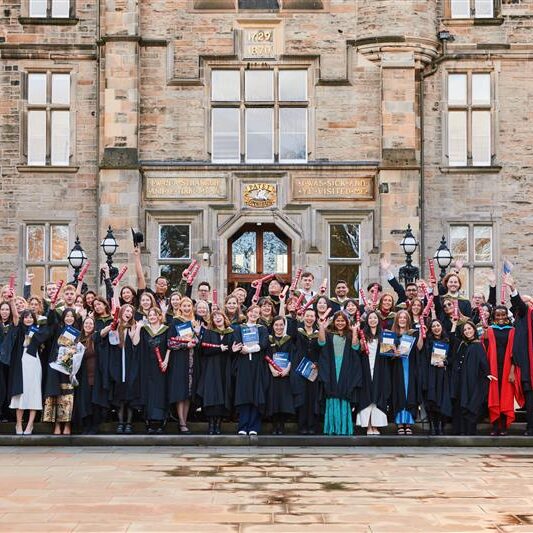
I do not think I have one dramatic favourite moment. What I remember most warmly is the everyday rhythm of being there. Some of my best memories are quite simple: staying behind after class because a discussion on inequality had gone somewhere unexpected, finding a quiet corner in the new EFI building to work, or using the free coffee as an excuse to stay a little longer. I also became very attached to the Italian wraps just outside, probably more than I should admit in an alumni profile.
The people made a huge difference too. I loved being around classmates who came from completely different disciplines and countries. A conversation could start with data or policy and end somewhere completely different, and those were often the moments that stayed with me most.
The Mastercard Foundation Scholars community was another big part of the experience. Being around people from across Africa, each carrying their own ambitions and sense of responsibility, was both motivating and grounding. Coming from Nairobi and fairly fast-paced work environments, Edinburgh also gave me a different rhythm. I walked more, thought more, and had more quiet than I was used to. When I look back now, I remember the academic work, but I also remember the coffee, the wraps, the friendships, and the feeling that I had enough space to think about who I was becoming.
What advice would you give to someone considering studying at Edinburgh Futures Institute?
Do not come to EFI expecting the programme to hand you one neat answer about what your career should look like. I think its value is almost the opposite: it exposes you to enough different ideas that you start asking better questions about your field and about yourself.
If you come from a technical background, take the social and critical parts of the programme seriously. If you come from a social science or humanities background, do not be intimidated by the technical conversations. The interesting part of EFI is the space in between. You do not need to become everybody else; you need to become better at understanding how your perspective connects with theirs.
I would also tell students not to experience Edinburgh only through deadlines. It is very easy, especially on a one-year master’s, to move from one reading list and assignment to the next and suddenly realise the year is almost over. Go to talks you are curious about. Speak to people outside your programme. Spend time with your cohort. Explore the university and the city. Some of what stays with you will not appear on your transcript.
And finally, do not worry if you arrive without a perfectly clear five-year plan. I did not leave EFI with every answer either. What I gained was a clearer sense of the problems I care about and the kind of contribution I want my work to make. For me, that has been much more useful than a rigid plan.