Research cluster

Children, Interaction, and Design (CID)

The Children, Interaction, and Design (CID) Cluster leads in interdisciplinary research and design of technologies for, and with, children that benefit their lives.

“We’re seeing a rapid growth in technologies for children in their early years. Our goal is to bring together all those who are passionate about understanding their influence and designing better”

Andrew Manches, Uta Hinrichs, Susan Lechelt (CID cluster leads)

Priorities

We draw together academics and non-academics across disciplines and organisations who seek to understand how children interaction with digital, and non-digital, designs across settings, and how we can use this knowledge to develop, with children, more beneficial products and experiences.

We adopt a critical approach, whilst also pursuing opportunities to scale the impact of our work, including through commercialisation where we consider beneficial.

We strive to include multiple partners and children in our research and design process, striving to ensure our work benefits all children.

We are based in Edinburgh but seek to engage with all those interested in this growing field nationally and internationally. We align closely with international communities: Child-Computer Interaction (CCI) and Interaction Design and Children (IDC).

Events

Upcoming

Past

Upcoming events and workshops will be posted here.

Digital Method of the Month: What LLMs Can and Cannot Do

The digital method of the month meeting is a safe space to freely discuss the practicalities of learning and implementing a new digital skill in your research. During this session, we will introduce the concept of Large Language Models (LLMs), discuss their strengths and weaknesses, and explore how they can be effectively integrated into research workflows.

Data-led methods training
UoE Internal

Getting Started with Python for Research

This course will introduce attendees to the basic concepts and features of Python programming language. The goal is for participants to feel comfortable with creating simple Python programs and provide them with the autonomy and confidence required to progress independently.

Data-led methods training
UoE Internal

Getting Started with R for Research

This beginner-friendly course will focus on developing skills and a fundamental understanding of R and RStudio. Participants will develop a familiarity with the principles and functionalities of R and RStudio, allowing them to confidently apply these, or indeed seek out new concepts, for their current and future research.

Data-led methods training
UoE Internal

Network Analysis from Scratch: Intro to Gephi

This three-session course introduces attendees to Gephi, a free and open-source network analysis and visualisation tool. The main focus will be on social network analysis, and attendees will have the opportunity to apply their own dataset in Gephi.

Data-led methods training
UoE Internal

Digital Method of the Month: Geospatial Data and GIS

The digital method of the month meeting is a safe space to freely discuss the practicalities of learning and implementing a new digital skill in your research. The method of this month is GIS, or Geographic Information Systems. GIS is a computer system that combines maps and databases to help people create, manage, and analyse information about places.

Data-led methods training
UoE Internal

From Images to Text: Working with OCR

This course is an introduction to extracting text from images and scanned PDFs using Optical Character Recognition (OCR) techniques. In the course, we will give you an overview of text extraction, demonstrate how OCR works in practice, using free, ready-to-use tools that are widely available.

Data-led methods training
UoE Internal

Collecting Data from the Web: Foundations of Webscraping

This workshop introduces the fundamentals of scraping user-generated content from the web using R or Python. The session will be hands-on, working through the process of scraping a selected static website step by step, before concluding with a discussion of the limitations of scraping and the challenges posed by more complex dynamic sites.

Data-led methods training
UoE Internal

Introduction to Geographical Data with QGIS

This course will focus on developing skills and a fundamental understanding of Geospatial data and the basic functionalities of QGIS. Each session begins with a presentation that introduces the theoretical principles and is followed by a guided practical exercise where these principles can be tested and applied, as well as developed upon. Please bring a mouse with you to the session.

Data-led methods training
UoE Internal

Digital Method of the Month: Data Visualisation

The digital method of the month meeting is a safe space to freely discuss the practicalities of learning and implementing a new digital skill in your research. A big part of conveying research results hinges on how these results are presented. Join us to discuss the main principles of effective and reproducible data visualisation.

Data-led methods training
UoE Internal

Silent Disco: Foundations of Sentiment Analysis

Sentiment analysis is the process of determining whether a piece of writing is positive, negative or neutral. Its use has become relatively widespread, including being used to analyse customer feedback, social media, user surveys, and more. This workshop will cover how it works; pros and cons; using it on text, user feedback and online sources.

Data-led methods training
UoE Internal

CID monthly reading groups

If you are interested in getting involved in our reading groups, we’d love to hear from you.

They are typically held on the second Wednesday of each month.

Get in touch

Projects

Our projects explore how children interact with their world, how we can design to influence interaction positively, and then scale this work to positively impact children’s everyday experiences. 

Featured
Report

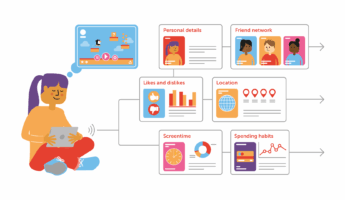
Grasping data: empowering young children to understand and benefit from their personal data

Illustration of a girl using a tablet, with icons showing her personal details, friend network, likes and dislikes, location, screen time, and spending habits being shared or tracked digitally.

This project aims to contribute knowledge to early learning, cognitive psychology, child-centred design, data ethics, data visualization and computer science. 

Meet our associates

Andrew Manches headshot

Andrew Manches

Professor of Children & Technology
Moray House School of Education and Sport
Ayça Atabey headshot

Ayça Atabey

Post-Doctoral Research Associate
School of Law
Cara Wilson headshot

Cara Wilson

Lecturer in Children and Technology
Edinburgh College of Art
Dushani Perera headshot

Dushani Imesha Perera Ushettige

Postdoctoral Research Associate
School of Informatics
A man with short hair, glasses, and a beard wears a blue and white checked shirt, standing in front of an ornate, bronze-coloured sculpted background.

Eder Coelho Paula

Associate Tutor (Placement) – PGDE Primary/PGDE Secondary
Moray House School of Education and Sport
Frauke Zeller headshot

Frauke Zeller

Chair in Design Informatics | Co-Director, Institute of Design Informatics
Edinburgh College of Art
Headshot of John Vines

John Vines

Centre Co-Director, Centre for Investing Innovation | Chair of Design Informatics
School of Informatics
Johnathan Hancock headshot

Jonathan Hancock

Postdoctoral Research Fellow
Moray House School of Education and Sport
Kate Farrell headshot

Kate Farrell

Director of Curriculum Development and Professional Learning
Moray House School of Education and Sport

Kay Tisdall

Chair of Childhood Policy
Moray House School of Education and Sport

Kexin Cheng

Research Assistant
Moray House School of Education and Sport

Laura Colucci-Gray

Personal Chair in Science and Sustainability Education; Co-Deputy Director of Research, Engagement and Impact
Moray House School of Education and Sport
Lisa Golds headshot

Lisa Golds

Innovation Fellow
School of Health in Social Science
Megan Baker headshot

Megan Baker

Research Project Administrator
Moray House School of Education and Sport
A young man with glasses, short light brown hair and a beard, wearing a white shirt, smiling in front of a blurred background with soft blue and white tones.

Rayo Verweij

PhD Candidate
School of Informatics
Rea Michalopoulou

Rea Michalopoulou

PhD Candidate
School of Health in Social Science
Serdar Abaci headshot

Serdar Abaci

Lecturer in Data and Digital Literacy
Moray House School of Education and Sport
Susan Lechelt headshot

Susan Lechelt

Lecturer in Design Informatics
Edinburgh College of Art
A woman with long reddish-brown hair, wearing a green jacket and patterned scarf, smiles outdoors in front of old stone buildings with tall chimneys and gabled roofs.

Valentina Andries

Postdoctoral Research Associate
Moray House School of Education and Sport

Our external associates

  • Lorna Gibson
    Head of Professional Development
    Micro:bit Educational Foundation
  • Kevin McPhee
    Teacher (Outreach)
    The City of Edinburgh Council
  • Micheal Stead
    Lecturer in Sustainable Design Futures
    Lancaster University
  • Alisa Brien
    Schools Engagement Coordinator
    National Museums Scotland
  • Emilia McKenzie
    Digital Manager, Learning
    Science Museum Group
  • Jack Cuffley
    Learning and Engagement Manager (Schools and Public Programmes), Dynamic Earth

Discover more at Edinburgh Futures Institute

Owl perched on telescope

RESEARCH

People meeting at a desk, looking at designs laid out on the table, green tint on image.

PUBLIC SErvices

Brick clocktower and front entrance of EFI building.

Our new home

headshot of katherine trebek

MEET OUR WRITER-AT-LARGE

Join us to challenge, create, and make change happen.

#ChallengeCreateChange