

- This event has passed.
When Universities Decide: From Collective Inquiry to Public Consequence
18th September 9:30 AM – 12:00 PM BST
Universities are under growing pressure to respond to rapid technological change, social challenges, financial constraints, and shifting public expectations. Yet decisions about the future of higher education are rarely straightforward. How should universities balance competing priorities? What values should guide their choices? And who is affected when difficult decisions are made?
Organised by the Una Europa Future University Lab, this participatory event invites attendees to explore the tensions, trade-offs, and responsibilities involved in shaping the university of the future. Through a collaborative workshop, participants will examine different perspectives on the purpose of the university and consider how institutions navigate competing demands in practice.
Rather than seeking simple answers or easy consensus, the session will encourage critical reflection on the choices universities face and the consequences those choices carry. Together, participants will explore what it means not only to imagine the future university, but to make decisions that help bring it into being.
Speaker Biographies
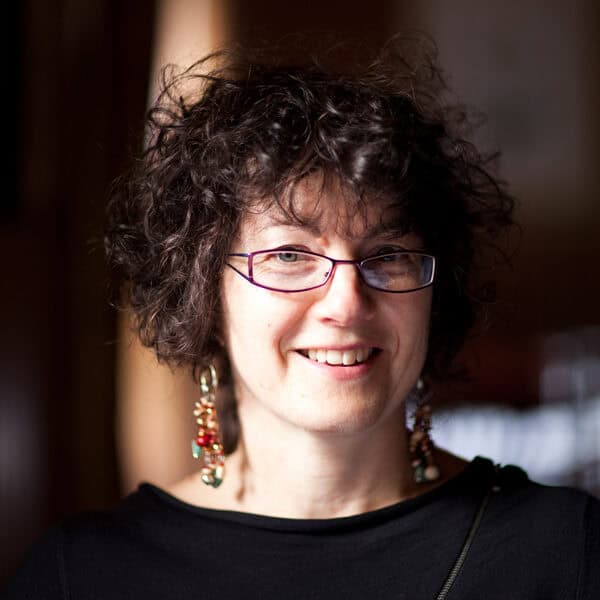
Federica G. Pedriali is Professor of Literary Metatheory and Modern Italian Studies at the University of Edinburgh and a Research Affiliate at the Edinburgh Futures Institute. Her work spans continental philosophy, biopolitics, narratology, and political ontology, with a sustained focus on how collectives organise change, conflict, and the conditions of world-making. She has authored or edited twenty-four volumes and is the editor of The Diaphragm of Politics: Roberto Esposito and Italian Thought beyond the Machine (Edinburgh University Press, in press). Current projects include The Future of Change (forthcoming), When Universities Decide (in preparation), and The Roberto Esposito Dictionary (in preparation). A former Visiting Professor at Harvard and the University of Pavia, she leads Europe and the World, a flagship Una Europa research strand spanning eleven European universities. In 2024, she was awarded the Knighthood of the Order of the Star of Italy in recognition of her distinguished career.
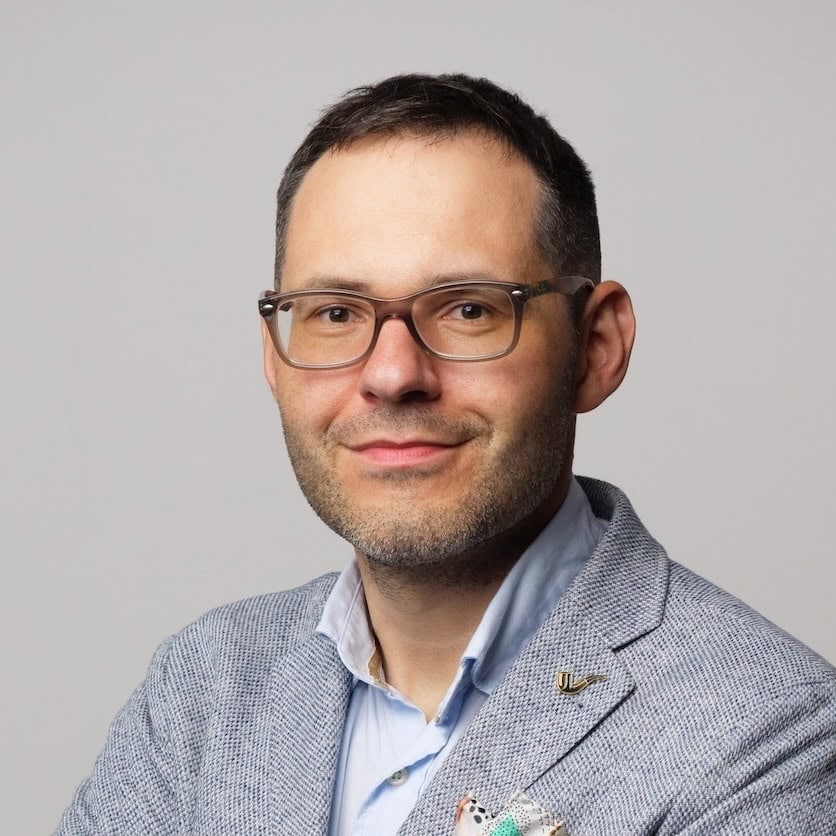
Mateusz Hohol is Associate Professor at the Jagiellonian University in Kraków, where he serves as Director of the Copernicus Center for Interdisciplinary Studies and leads the Mathematical Cognition and Learning Lab. Holding a habilitation in psychology and a PhD in philosophy, his research focuses on cognitive science, mathematical cognition, and the study of how minds acquire and process numerical and geometric concepts. He teaches in the Cognitive Science Programme and at the Doctoral School in the Social Sciences at the Jagiellonian University.

Jake Broadhurst is a senior partnerships advisor at The University of Edinburgh and for 2 decades has helped create a wide range of academic-led partnerships.
As chair emeritus of Future UniLab, Jake helped the Una Europa alliance think-tank to explore the future of universities. Before joining The University of Edinburgh, Jake worked as a project manager for a healthcare NGO in India, did various roles in TV production in Spain, DJed, served as deck-hand on an oyster farm, and was a countryside ranger. Jake founded TEDx University of Edinburgh and co-founded the World Access to Higher Education Day.

Michela Massimi is Professor of Philosophy of Science at the University of Edinburgh. She is the author of Perspectival Realism (2022, OUP, winner of the 2023 Lakatos Award) and co-editor (with A.E. Brown and M. Jaspars of Ways of World Knowing (2026, OUP). Michela has written extensively on realism and pluralism in science, among other topics. Her most recent work is on the epistemic value of local knowledges, their importance for better understanding the participatory nature of scientific knowledge, and the philosophical foundations of the human right to science.

Professor Shannon Vallor FRSE serves as Co-Director of the Centre for Technomoral Futures at Edinburgh Futures Institute, and holds the Baillie Gifford Chair in the Ethics of Data and Artificial Intelligence in the University of Edinburgh’s Department of Philosophy. Professor Vallor joined the Futures Institute in 2020 following a career in the United States as a leader in the ethics of emerging technologies, including a post as a visiting AI Ethicist at Google from 2018-2020. She is the author of The AI Mirror: How to Reclaim Our Humanity in an Age of Machine Thinking (Oxford University Press, 2024) and Technology and the Virtues: A Philosophical Guide to a Future Worth Wanting (Oxford University Press, 2016). She serves as advisor to government and industry bodies on responsible AI and data ethics. She is also Principal Investigator and Co-Director (with Professor Ewa Luger) of the UKRI research programme BRAID (Bridging Responsible AI Divides), funded by the Arts and Humanities Research Council.

Professor Soledad Garcia Ferrari is International Dean for the College of Arts, Humanities and Social Sciences at the University of Edinburgh, where she leads global collaboration around research, innovation and education. She has enabled and supported cross-university strategic partnerships such as such as with the MasterCard Foundation and the Una Europa Alliance. Soledad is Professor in Global Urbanism and Resilience and has extensive expertise in sustainable urban planning with a focus on community-empowerment, participatory and co-creation processes, towards increasing resilience and adaptation to climate change in urban areas. She is currently Earth Champion for Sustainable Cities at the Edinburgh Earth Initiative. Soledad is also Director of the Centre for Contemporary Latin American Studies, Soledad through which she has promoted and supported cross-University research collaboration.