“People from across the University of Edinburgh work on research and knowledge exchange relating to cultural heritage. The Digital Cultural Heritage cluster connects these people and celebrates work they do that engages with a very broad range of topics, concepts and technologies.”
Dr Andrea Kocsis and Dr Philippa Sheail, Digital Cultural Heritage Cluster Leads
The Digital Cultural Heritage cluster brings together researchers from across the University of Edinburgh who work on analysing, understanding and developing new approaches to the relationships between data, digital and cultural heritage.
Working with a wide range of partners in the gallery, library, archive and museum sector, cluster members are researching tangible and intangible cultural heritage as it relates to digital preservation, sharing and copyright, new audiences, organisational transformation, learning from collections, community engagement, tourism, curatorial practice, text mining, and geographical information systems.
Our research spans both local and global heritage contexts, and draws on a wide range of theoretical perspectives.
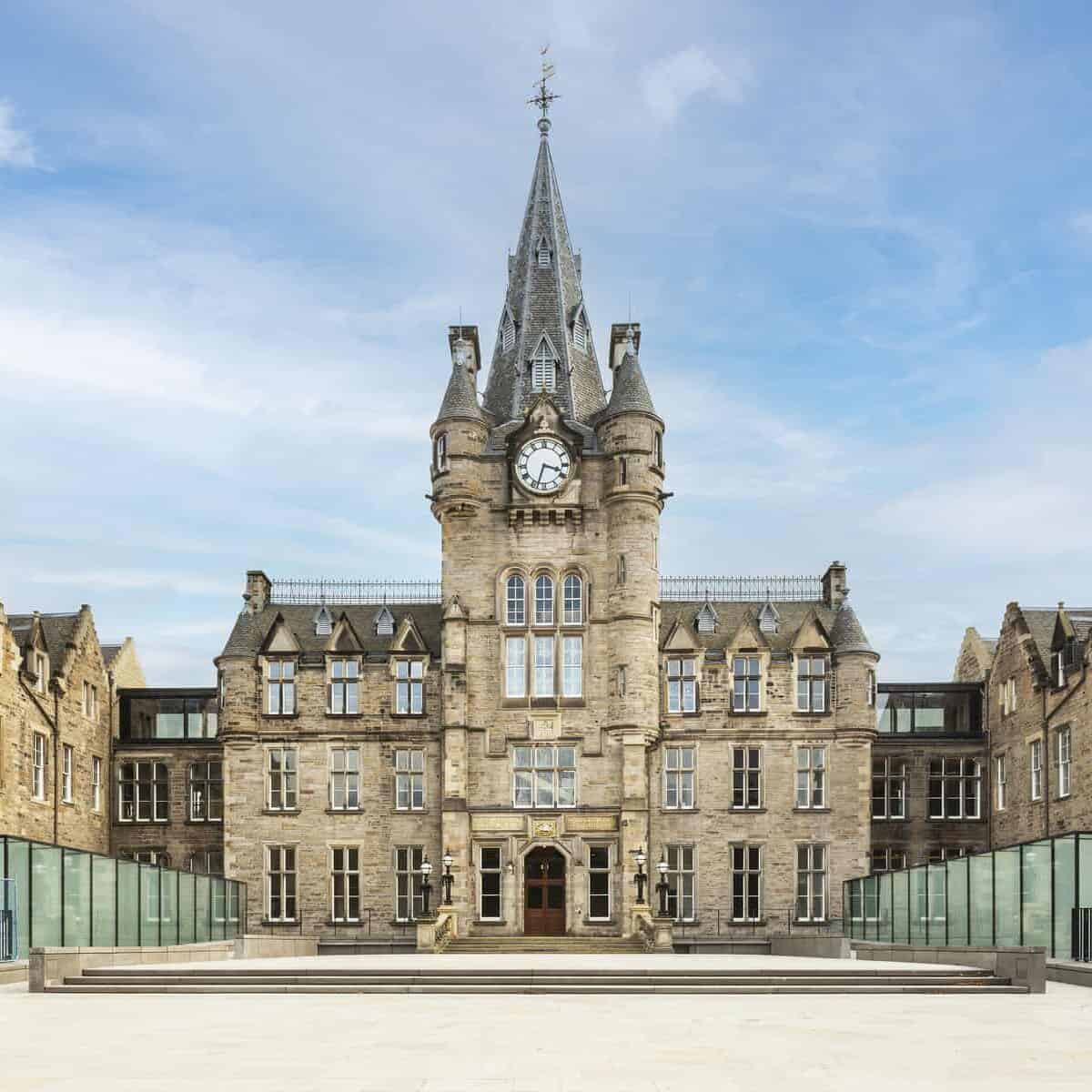
Image credit: Mols, Nick; Khan, Asad; Boyd, Mike. (2019). 55 George Square during Edinburgh Festival, [dataset]. University of Edinburgh. Centre for Data Culture and Society. https://doi.org/10.7488/ds/2730
Meet our researchers










































Copyright, IP and access
We explore the complex legal, social, educational and design implications of emerging patterns of access, changing orientations to copyright, methods and ethical implications of attempts to control intellectual property, and the nature of digital openness in the cultural heritage sector.
Digital Documentation
Digital documentation of cultural heritage is a site of significant innovation and technological change, as scanning technologies and methods become increasingly sophisticated and allow unprecedented forms of analysis of and access to heritage. Our research explores the uses and futures for these emerging technologies.
Tourism and Heritage
Our research in this area explores the implications of the digital in shaping and changing the relationships between tourism and heritage, including navigating preservation of and access to cultural heritage, and the role of tourism in producing heritage.
Geospatial Data and Heritage
We design, develop, investigate and find new uses for geospatial applications and datasets. Geospatial analysis of archives, texts and collections generates new research insights and public engagement opportunities in a wide range of heritage contexts.
Digital Engagement, Learning and Participation
We research how people engage with digital and digitised cultural heritage; and how digital technologies and tools support new forms of learning, engagement and participation. Our work spans topics and approaches including crowdsourcing, public and participatory history, evaluation and engagement, community archiving and digital education.
Working with Digital Archives and Collections
We develop and use innovative methods for creating, analysing, searching, digitising, and combining archives and collections, including text mining, geoparsing, image recognition and other forms of knowledge discovery and creative uses of archives and collections as data. These methods help us better understand the past and shed light on present-day issues and questions.
Projects
Here are some of the projects that cluster members are working on – feel free to contact them for more information or to get involved.




Updates & Events
Upcoming events and workshops will be posted here.
Digital Method of the Month: What LLMs Can and Cannot Do
The digital method of the month meeting is a safe space to freely discuss the practicalities of learning and implementing a new digital skill in your research. During this session, we will introduce the concept of Large Language Models (LLMs), discuss their strengths and weaknesses, and explore how they can be effectively integrated into research workflows.
Getting Started with Python for Research
This course will introduce attendees to the basic concepts and features of Python programming language. The goal is for participants to feel comfortable with creating simple Python programs and provide them with the autonomy and confidence required to progress independently.
Getting Started with R for Research
This beginner-friendly course will focus on developing skills and a fundamental understanding of R and RStudio. Participants will develop a familiarity with the principles and functionalities of R and RStudio, allowing them to confidently apply these, or indeed seek out new concepts, for their current and future research.
Network Analysis from Scratch: Intro to Gephi
This three-session course introduces attendees to Gephi, a free and open-source network analysis and visualisation tool. The main focus will be on social network analysis, and attendees will have the opportunity to apply their own dataset in Gephi.
Digital Method of the Month: Geospatial Data and GIS
The digital method of the month meeting is a safe space to freely discuss the practicalities of learning and implementing a new digital skill in your research. The method of this month is GIS, or Geographic Information Systems. GIS is a computer system that combines maps and databases to help people create, manage, and analyse information about places.
From Images to Text: Working with OCR
This course is an introduction to extracting text from images and scanned PDFs using Optical Character Recognition (OCR) techniques. In the course, we will give you an overview of text extraction, demonstrate how OCR works in practice, using free, ready-to-use tools that are widely available.
Collecting Data from the Web: Foundations of Webscraping
This workshop introduces the fundamentals of scraping user-generated content from the web using R or Python. The session will be hands-on, working through the process of scraping a selected static website step by step, before concluding with a discussion of the limitations of scraping and the challenges posed by more complex dynamic sites.
Introduction to Geographical Data with QGIS
This course will focus on developing skills and a fundamental understanding of Geospatial data and the basic functionalities of QGIS. Each session begins with a presentation that introduces the theoretical principles and is followed by a guided practical exercise where these principles can be tested and applied, as well as developed upon. Please bring a mouse with you to the session.
Digital Method of the Month: Data Visualisation
The digital method of the month meeting is a safe space to freely discuss the practicalities of learning and implementing a new digital skill in your research. A big part of conveying research results hinges on how these results are presented. Join us to discuss the main principles of effective and reproducible data visualisation.
Silent Disco: Foundations of Sentiment Analysis
Sentiment analysis is the process of determining whether a piece of writing is positive, negative or neutral. Its use has become relatively widespread, including being used to analyse customer feedback, social media, user surveys, and more. This workshop will cover how it works; pros and cons; using it on text, user feedback and online sources.
Using API for Research
In this course we will cover what application programming interface (API)s are, what they do, how to use them to access and connect data sources. We will also discuss practical considerations such as rate limits, authentication, and the availability of APIs for researchers.
Getting Started with Descriptive Statistics
This workshop will focus on developing practical skills for summarising and exploring data using R or Python. The session will introduce key concepts in descriptive statistics, including measures of central tendency, measures of variability and data distributions.
Silent Disco: Working with Named Places: How and Why to Build a Gazetteer
This lesson teaches how to create a digital gazetteer from a historical text using the Linked Places Delimited (LP-TSV) format. A gazetteer records place names, spatial extents, and historical data, offering a structured knowledge system to connect places, events, and people across time. It is a key tool for spatial history and digital humanities.
Using Prompting Efficiently for Research
This workshop aims to introduce the main strategies of prompt engineering including tips and certain practices to achieve optimal outputs with Generative AI (Gen-AI) tools. After providing a hands-on overview of prompt engineering, certain features of ChatGPT will be discussed for fostering the research practices.
Build Your Personal or Project Website with GitHub Pages
GitHub Pages is a free service that includes different website templates and is used by many academics for personal and project websites. While it requires some programming skills, it is easy to set up and highly customizable. During this course, we will help you set up your own website with GitHub pages, add content to it, and make small design changes if desired.
Working with Archive Data (pictures of text, scanned files, PDFs)
The workshop will focus on developing a batch-processing workflow rather than processing documents individually. By the end of the workshop, participants will have a better understanding of how to use Python to transform scanned documents and image-based PDFs into searchable text.
Digital Method of the Month: Software Development with Generative AI
The digital method of the month meeting is a safe space to freely discuss the practicalities of learning and implementing a new digital skill in your research. During this session we will discuss trade-offs regarding gains in productivity and the dangers of producing executable code; how the development of these tools changes the nature of learning to code; as well as best practices and strategies for exploring this safely.




Digital Cultural Heritage Research Network
We work closely with the Digital Cultural Heritage Research Network, whose membership spans both the higher education and GLAM sectors. The network was launched in 2016, and is always open to new members.